Begin Reading

The Art of Public Maintenance

According to the Oxford Dictionary Maintenance is defined as:
– the process of preserving a condition or situation
– the state of being preserved.
– the process of keeping something in a good condition.

The act of Maintenance is demarcated into discrete categories or spheres, public and private, locked into the binary narrative of gendered roles.

Public Maintenance jobs (just to name a few):
– cleaner
– janitor
– maid (hotel staff)
– laundry mat
– dry cleaners
– sanitation workers
– plumbers
– repair workers
– garbage collectors

Private Maintenance or domestic unpaid labour can still be summed up in one word:
– housewives

Public Maintenance is performed by both genders (though of course the job titles and types of jobs are gendered), whereas private Maintenance has been traditionally the domain of the woman (whether she liked it or not)!

As Mierle Laderman Ukeles would say: “Maintenance is a drag; it takes all the fucking time (lit.) the mind boggles and chafes at the boredom. The culture confers lousy status on maintenance jobs = minimum wages, housewives = no pay.”

Yesterday I had the opportunity to interview Facility Coordinator Elise from a government contracted company, contracted to maintain public spaces.

The public spaces they maintain include:
– parks
– roads
– footpaths
– parking metres
– street furniture (park benches)
– bridges
– wharves
– public toilets

Job titles like Facility Coordinator, Elise’s job as you can imagine is not to clean public toilets per sa, she doesn’t wear PPE, no high vis vests or casual tradie gear. Elise wears your typical office outfit of pencil skirt, blouse and flats. Wearing office clothing essentially allows Elise and her coworkers to blend in with their surrounding in Sydney, a city of business. The sight of Maintenance and Maintenance workers in process troubles the established order of things; do you think the cleaner works out of office hours because otherwise they would impede workers by being in the way!

Elise’s job of maintaining public toilets involves monthly inspections to ensure that they are being maintained in an orderly fashion!

Monthly inspections are preventative checks for:
– cleanliness of toilets, mirrors and the space
– bins, are they empty!
– graffiti detecting
– ensure the plumbing is in working order and above board
– record and report any damages, such as: smashed pipes, smashed brick walls, smashed mirrors, smashed toilets (clearly someone or some ones are compulsive smashers…), over enthusiastic litter bugs and the list goes on!

The public toilets that Elise, her coworkers and the company maintains include seven lots, three located in The Rocks and four in Darling Harbour.

Public toilets are a public good, maintained with tax payer money! Which only serves to high light the pure stupidity of acts of vandalism and I do not mean graffiti, which is rather low on the damages scale when compared with smashed plumbing which can cost up towards of $20,000 depending on the extent of the damages.

The gendering of public toilets reinforces the binary narrative, whereas in the domestic setting the humble toilet is a free-for-all, the only gender belongs to the users as nature intended.
The 1% Poo Project

This blog was created in response to an excursion to the Cronulla Sewage Treatment Plant, as a continuation of the initial ideas sparked from the visit, through research and exploration of sewage.

Rather than limit the scope of my project to a fixed, secure site Cronulla Sewerage Treatment Plant, I have incorporated the entire city of Sydney’s sewerage infrastructure. All drains converge and the effluent flows through the pipes all over our city (or more accurately under it).

I would like to invite fellow classmates and members of the public to contribute to my blog with posts of their own!

  • How do you relate to poo?
  • How do you relate to sewage?
  • What are your thoughts on the toilet, do you know where your sewage goes?
  • Are you aware of the pipes that ceaselessly flow under your feet in the city streets?
  • How do you relate to the maintenance of a clean city?
  • What does it mean to be clean?

Using the above prompt, please write a creative response in 500 words or less. Your writing could take the form of prose, memory, poetry, script, narrative, or something entirely other!

Vents Aplenty

On the heritage register there are eighteen items for vent.

  1. 360 Streatfield Rd, Bellevue Hill
  2. 315 Military Road, Bondi
  3. 154 Denison Street, Bondi Junction
  4. 289 Elizabeth & Bathurst Streets, Hyde Park, Sydney
  5. 280 Churchill Ave, Strathfield
  6. 254 Connemarra Street, Bexley
  7. 255 Connemarra Street, Bexley
  8. 213 Falcon St & Freeway, North Sydney
  9. 198 The Boulevarde, Lewisham
  10. 24- 26 Premier Street, Marrickville
  11. 381 Corunna Road, Stanmore
  12. 158 York Street, Glebe
  13. 156 Lilyfield Road, Lilyfield
  14. 73 Grantham Street, Burwood
  15. 69 Railway Parade, Burwood
  16. 71 Paisley Road, Croydon
  17. 67 Tenterden Road, Botany
  18. West Botany Street, Arncliffe (demolished and replaced)

The vent shafts are composed of:
– one Sandstone
– eight Brick
– two concrete
– two iron wire
– five steel
I have talked a deal of the Hyde Park Obelisk, I now propose to revisit it and the other seventeen sewer vents in order to draw them, to get a feel for the various sites and gauge what would be best for a proposed Tour of The Great Big Fart Towers of Sydney, The City of Celebrated Stinks.
Stay tuned!

Discreet Relations – Composting

The date: Tuesday 7th May
The time: 6:00 – 7:00 pm
The event: a performative recitation of Maria Puig de la Bellacasa’s essay “Making Time for Soil
The hosts: COMPOSTING Feminisms and Environmental Humanities a reading group
The place: The Clothing StoreCarriageworks, Sydney
The work: Kaldor Public Art Project 34: Absorption by Asad Raza
The exhibition dates: 3rd – 19th May

On a tuesday night (last week) I made my way after work to Redfern Station and from there to The Clothing Store, Carriageworks where Asad Raza has with partners and collaborators installed the space with approximately 300 tonnes of soil. This soil includes a combination of organic and inorganic material, from sand, silt, clay, phosphates, lime, spent grain, to cuttlebone, legumes, coffee and green waste.

The first thing I noticed on entering the space was how much colder it was, the temperature change seemed to be seeping from the ground up through the soles of my shoes. It was darker, there are coverings over the windows blocking out what was left of the setting sun. The second thing was the smell. A subtle earthy scent dominated the air, seemed to secrete from all around the space. The soil is cared for by volunteer propagators, a mixture of artists and scientists, the two disciplines collaborating in the care of this living installation. The propagators are identified by the tools they use (pitch fork, ph kit and hose) and their uniform of reflective silver outer asos vests. There are two rooms at the back that are open two the public. The room on the left contains the data that is collected on the soil, ph levels each day, what was added on a certain day and by who. The room on the right contains the uniforms of the propagators, a collection of jars and other containers with strange contents.

Near the entrance there is a room not open to the public, with a sign for staff only but there is no door and like the other rooms open to the public and the main space the floor is covered with soil. In this room is a toilet, which begs the question, is one thing that gets added to the soil propagator night soil.

Are living organisms part of soil? We would include the phrase ‘with its living organisms’ in the general definition of soil. Thus, from our viewpoint soil is alive and is composed of living and nonliving components having many interactions … When we view the soil system as an environment for organisms, we must remember that the biota have been involved in its creation, as well as adapting to life within it. (Coleman et al., 2004: xvi, emphasis added)

In the approximate centre of the space there was a circle of crate chairs, at 6pm they promptly filled and in fact more were need so the circle grew and as all organic life grows it did no expand in a perfect circular shape, rather it bent and twisted out of the mould. COMPOSTING Feminisms and Environmental Humanities reading group began naturally by introducing themselves and the event. They passed around a box with quotes from the reading, Maria Puig de la Bellacasa’s essay “Making Time for Soil“, each person was to take one or more, as there were many and read it out loud and bury it in the soil.

After a quote was read or sometimes after a few quotes were read in succession they were discussed by the group as a whole.

Care is political, messy and dirty, not an innocent category, and even less so in technoscience (Haraway, 2011; see also Murphy in this special issue; Kortright, 2013; Puig de la Bellacasa, 2012).

Care is a necessary everyday doing, but it can also become a moralistic regime of power and control (Ticktin, 2011).

I do not remember the quotes I picked out of the box because I afterwards buried them. The article forsters intensification of involvement with soils, soils as living, they need proper care and maintenance on the timescale of soils and for that to happen human-soil relations have to change from the dominate timescale the production adenga to one of making time to care.

The ancient wisdom and indigenous technical knowledge about benefits of manuring, reduced tillage, conservation farming and other practices abandoned somewhere on the way, need to be re-learnter’ (Rao, in Hartemink, 2006: 116).

As the recitation was proceeding, seated I couldn’t help but notice that my feet were getting colder and colder, it was like I could feel the deep down dampness of the soil threw my shoes and socks. However when I touched the soil with my hands in order to bury the small pieces of quote paper I’d selected from the pile, it didn’t feel as cold as my feet. It was soft, grainy, almost dry and cool to the touch.

At 7pm the recitation concluded, the quotes were buried, the imperfect circle broke up, the chairs were packed away and the people divided into little groups to chat or leave singly, in pairs or collectively.

I came back another day, monday 13th and to ask the propagators questions because they weren’t there for the recitation and to collect a bag of the soil, you can too!

Work Siting

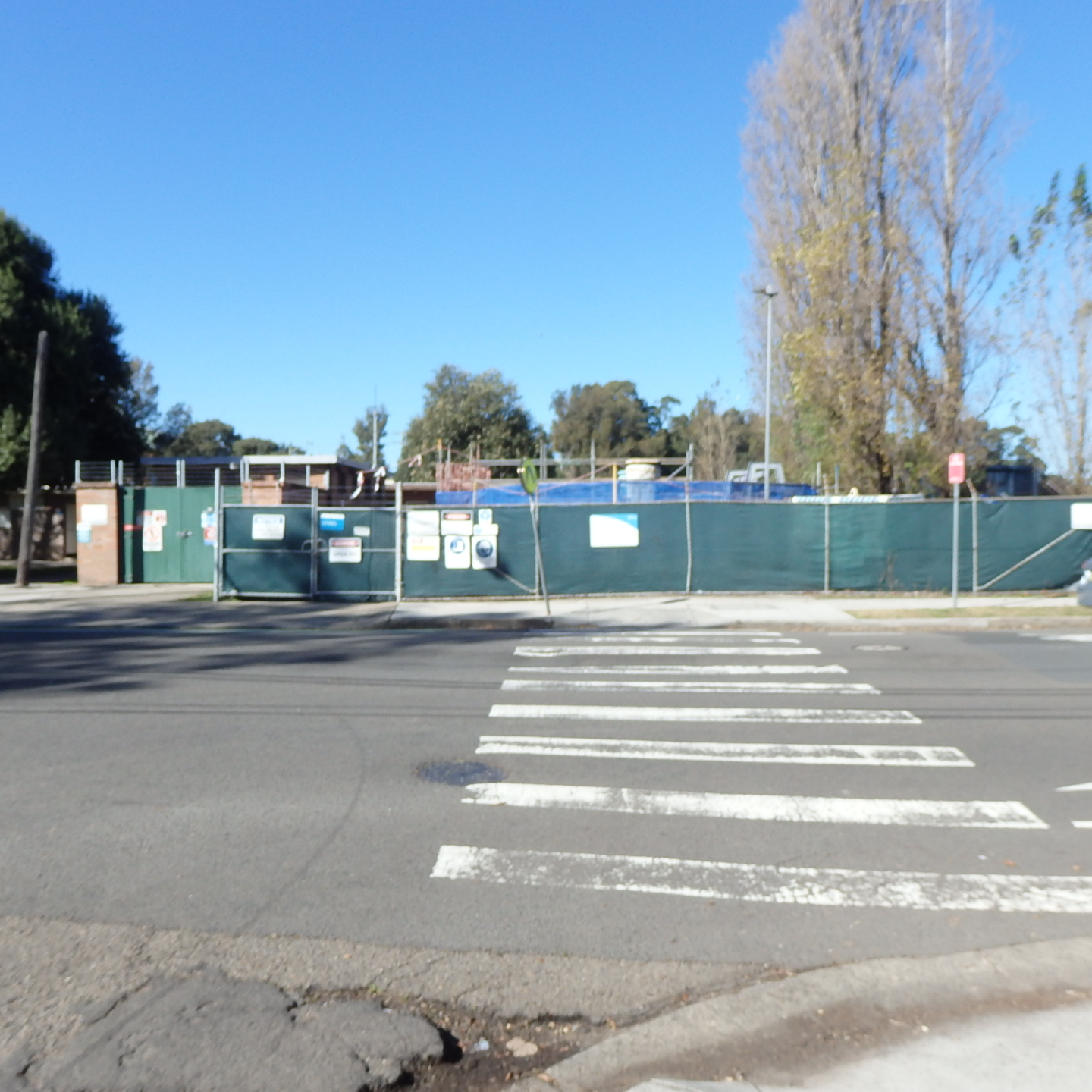
Walking from Tempe Station to my work on Carrington Road I cross through a park and for as long as I can remember since I started taking this route to my work on a recommendation that it was quicker (two years), there has been a construction site in the park. The site in question is the Marrickville Drainage Pumping Station (I only recently realised) and it’s getting an upgrade. However that being said it has been quite a while since I last saw any activity there or anyone, it looks like something of an abandoned junkyard (minus the menacing guard dog).
The site is small. There are two big blue tanks just outside the perimeter of the site, which is roughly square in shape and surrounded by a brick and black metal fence shrouded in semi-transparent green fabric. The entrance gate is solid green corrugated iron, like most of the fence it is bedecked with signs that either inform, warn off or direct, such as the sign DANGER, OPEN PIT that is emblazoned on the front. A few of the signs are faded or possibly damaged. On the one side of the fence where the green shroud is more transparent you can see pallets of wood, large pieces of piping and metal lying around equally abandoned, there is a rusty shipping container, the grass is long and the door and windows of the small demountable building in the site are always locked. However I couldn’t see the open pit from the outside!

It begs the question what are they waiting (or stalling) for? Just on the fabrication of a particular rare part? Or more government funding? Which understandably might take some time (if it comes at all).
What led me to discovering it was one the signs of the site that said Marrickville Drainage Pumping Station. The second thing I noticed was the smell, it was that same salty dank scent, always pungent and familiar. Though this time it was very subtle, I had to be up quite close to the fence before I got a whiff of it. The third thing I noticed was the noise, that there was none. Not just from the lack of construction and people, but from the drainage pump itself. In Marrickville there are a lot of construction noises from the surrounding areas, forklift sirens, hammering, jackhammering, drilling, banging and the list goes on. Not to mention the planes that fly overhead, so it is a welcome relief when a place is quiet.

Last door on the right…

A place for everything & everything in its place

Lest the order be disturbed.
Saliva belongs in your mouth, snot in your nose, wax in your ears, piss in your bladder and shit in your ass.
It is acceptable to consume.
To eat, to drink, to wash, to shop because you need to eat and drink to live.
To be excreted from the orifices of the body is a big no, no, no!
The things that leave the body, be they solid, liquid or gas cross the line.
That they have been processed of all their nutrients, have been in effect used up, expired.
Now that they are expelled from our bodies their usefulness is over.
They are death.
They are taboo.
The untouchable, dirt.
To make matter worse they smell.
Polluting the air we breathe and everything they touch.
A constant reminder of our decay.
We consume and excrete, therefore we too will be consumed and excreted.

Are you still shitting comfortably?

The time of day, the shape, the colour, the smell, the size…
All factors to consider for your overall comfort, health and of course, most importantly the aesthetics of your shit.
Light to dark brown, you are in the peek of poop vigour!

However if you desire to change the colour for a bit of variety, allow me to make a few suggestions, follow them at your own peril:

  • Beetroot for a lovely red
  • Rich green vegetable diet for a lush green
  • Licorice for a deep dramatic black
  • Heavy oil and fat diet for a foul yellow

The shape and size are personal, almost a fingerprint and irralvent. No criminal has yet been identified by the shape and size of their shit. The change in pattern that is of importance for health, of course.

  • three times a day
  • once every day
  • once every three days
  • once a week

Normal is personal.

Life Happens in the Intestines

In every gram of shit there are more than a billion living bacteria.

OCCUPIED!

Kopi Luwak – Coffee Recipe

serves one

ingredients

  • civet cat
  • coffee cherries
  • cage
  • sink
  • coffee processing equipment

Step 1
grow a coffee plantation

Step 2
capture and cage the civets that show up for a quick snack

Step 3
force feed the civet solely on coffee cherries

Step 4
the digestion process removes the skin and pulp, but the beans go through a fermentation process

Step 5
the beans are then pooped out in clumps, similar to a granola bar

Step 6
the beans are harvested by hand, washed and dried

Step 7
the beans are then pounded to remove their skins, sorted, and roasted for the perfect cup of poo.

Install in the Bathroom Stall

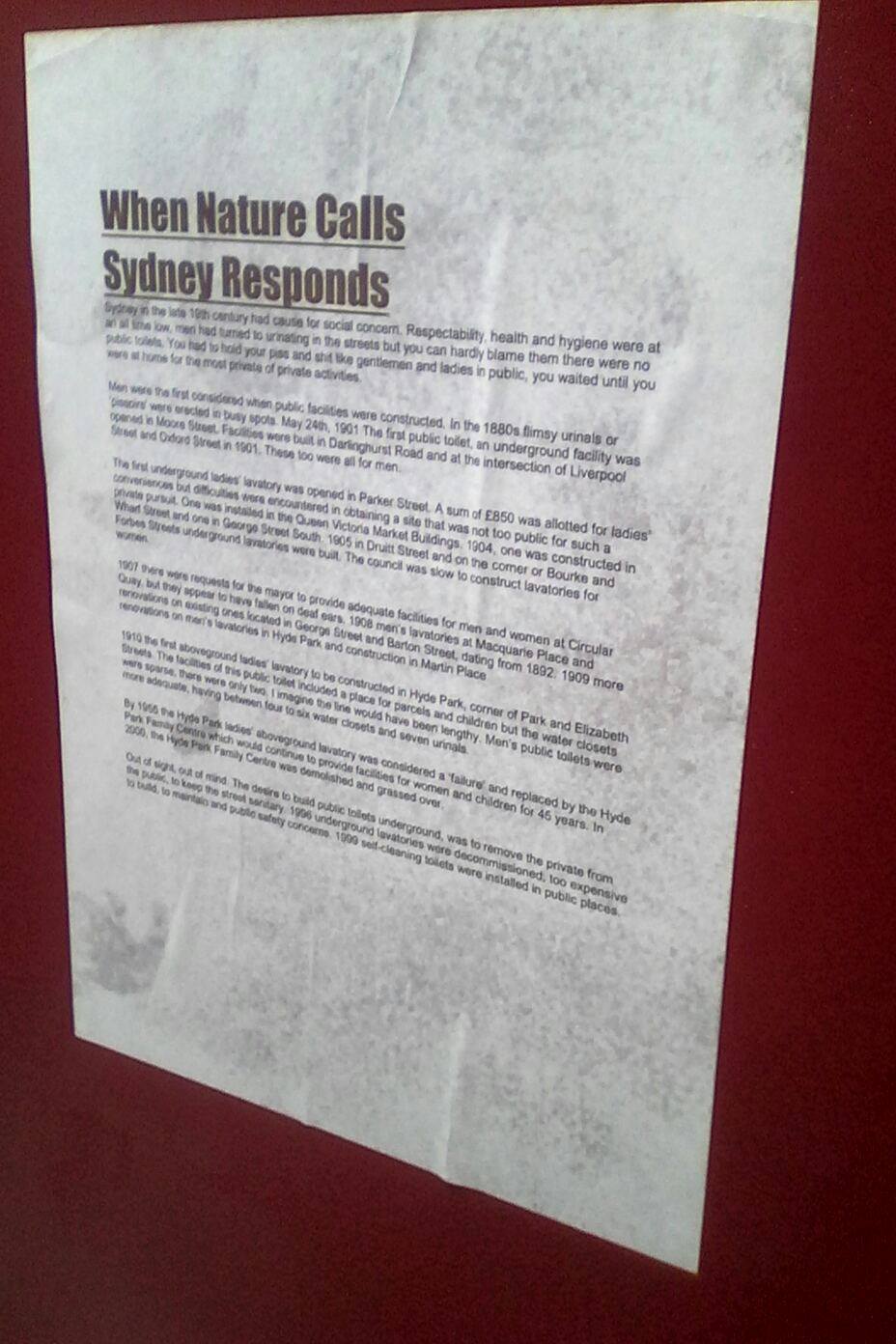
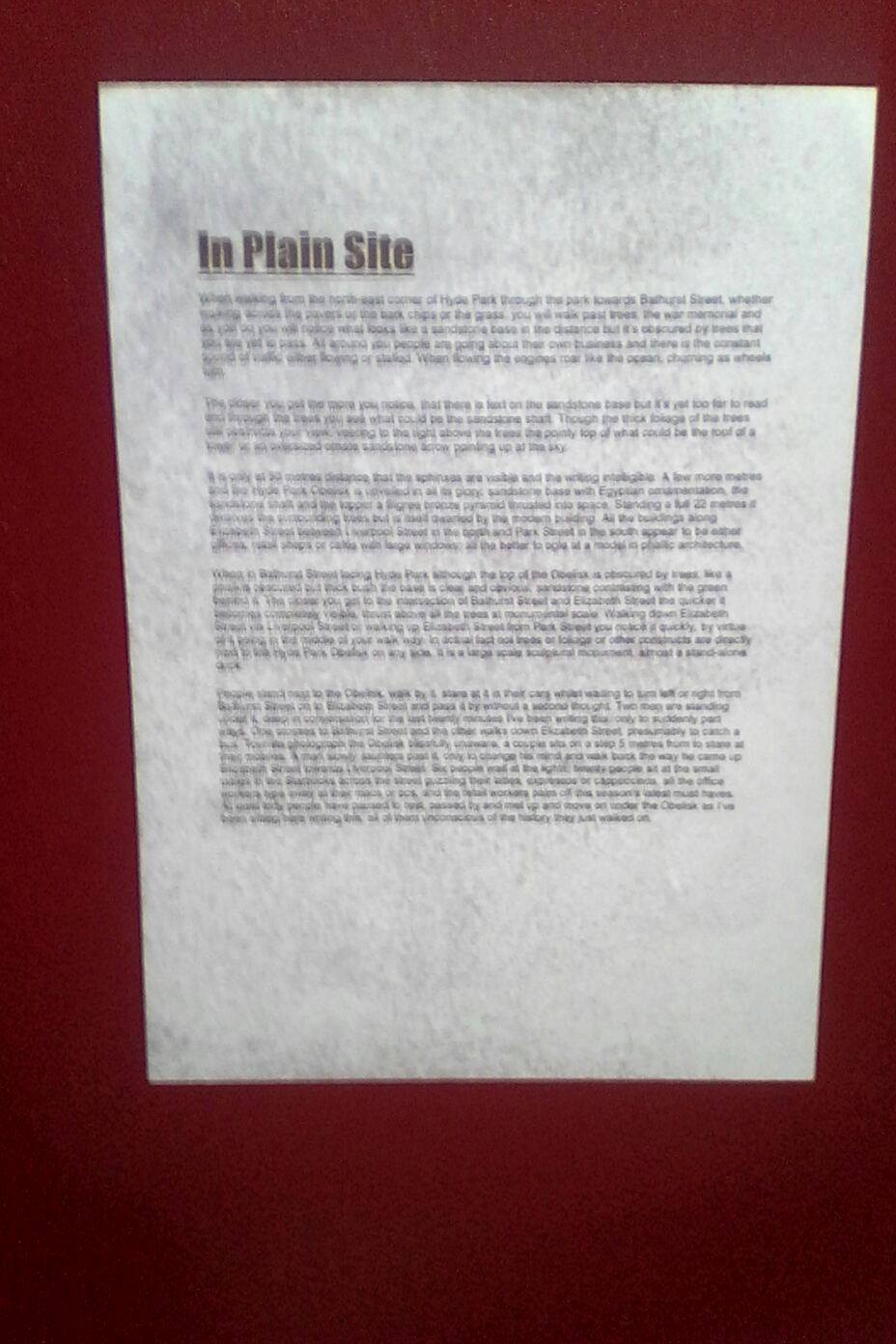
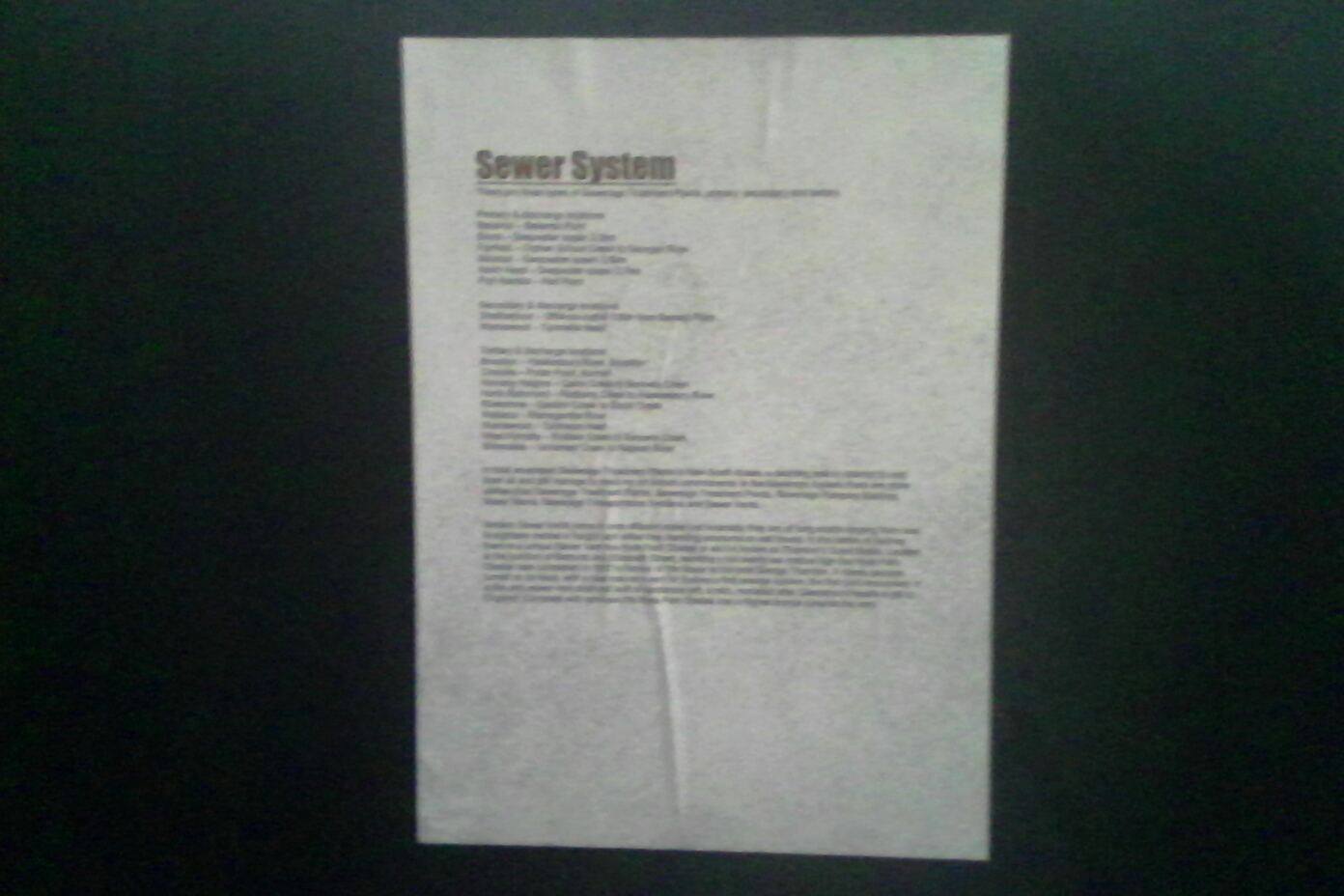
Last friday afternoon, yesterday, I printed ten page from this blog and pasted them up in public toilets around Sydney CBD. Starting from National Art School, I pasted up two pages in toilets on separate ends of the campus. For my next stop I walked down Oxford Street towards the Art Gallery of NSW where I pasted up three pages on the backs of three toilet stalls. I then left the gallery, on my way to St James station I saw a set of public toilets but they were locked so I pasted up a page near the entrance door instead. At St James station I pasted up another page and caught the next train to museum station and pasted up two more there. I then caught the next train to townhall and deposited my last page in a toilet stall there, before catching a train home.

Annotate that Shit

  • Summersdale. The little book of shit. London.:Summerdale Publishers, 2018.

The little book of shit is a palm-sized toilet humor book. It takes quotes from famous philosophers, scientists, religious figures, politicians, popular culture and of animals and inserts shit, e.g.: a doctor would say “take two shits and call me in the morning”. It gets a bit repetitive after 159 pages. The little book of shit should not to be taken seriously; however it is good for a laugh and relates to my interest in words, specifically words on shit.

  • Roach, Matt. Know your sh*t, what every type of turd says about your health. London.:Vermilion, 2018

Know your sh*t, what every type of turd says about your health with the aid of Illustrator Douggy Pledger and Gastroenterology Specialist Dr. Rebecca Smith, Matt Roach writes a humorous “guide to every poo you will ever do”. Part factual and part toilet humor swatch book, at 22 pages, it is concise. Covering everything you need to know from the ideal pooping posture and where poo comes from to the 19 different turds. A very handy resource for my research on words and shit.

  • Laporte, Dominique. History of shit. Cambridge, Mass.:MIT Press, 1993.

History of shit is the history of body politics, “ties the concept of the individual to the fate of human waste…the history of subjectivity”. Laporte uses humor to laugh at the very idea of the grand civilization built essentially on shit. The History of shit is an in-depth look at how the management of human waste is at the core of our modern identity, language and politics “defecation today is at the same stage that sex was during the reign of Queen Victoria. It’s more done than talked about”. “Cloaca maxima: even the most insipid history manual and the most elementary schooling in Latin seized every occasion to praise the cloaca maxima as the signifier of civilization par excellence”. However the History of shit is limited, mainly focusing on France. I would consider this book relevant to my blog, as the concepts on the body and politics  it discusses are things I interested in unraveling.

  • Dekkers, Midas. The story of shit. Melbourne, VIC.:The Text Publishing, 2018.

The story of shit by biologist Midas Dekkers combines humor, history, culture, science, environment and the personal to tell a compelling story of shit. Dekkers covers everything from defecation and the workings of the gut to toilet etiquette. “A place for everything and everything in its place, lest the order be disturbed”. “The only thing vegetarians have going for them is being right. And unfortunately you can’t eat that”. “The problem with farting is you so rarely can do anything about it”. The story of shit focuses a little too much on the sexual arousal of shit and the act of shitting itself. I would consider this book the most relevant to my blog, as it mentions the sewer system and compares it to the workings of the gut.

Just so you know I know my shit, here are some of the sources of my research…

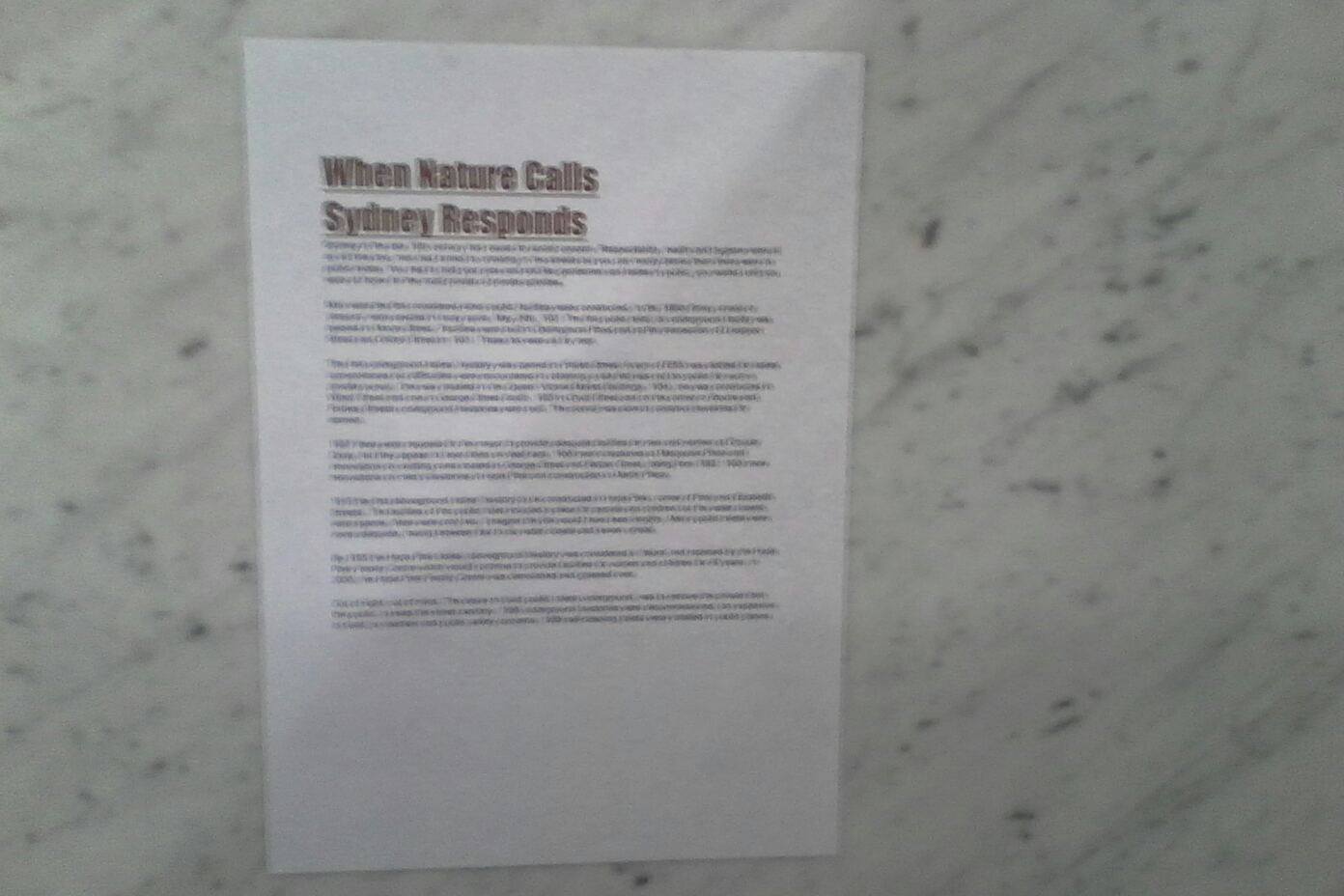
When Nature Calls Sydney Responds

Sydney in the late 19th century had cause for social concern. Respectability, health and hygiene were at an all time low, men had turned to urinating in the streets but you can hardly blame them there were no public toilets. You had to hold your piss and shit like gentlemen and ladies in public, you waited until you were at home for the most private of private activities.

Men were the first considered when public facilities were constructed. In the 1880s flimsy urinals or ‘pissoirs’ were erected in busy spots. May 24th, 1901 The first public toilet, an underground facility was opened in Moore Street. Facilities were built in Darlinghurst Road and at the intersection of Liverpool Street and Oxford Street in 1901. These too were all for men.

The first underground ladies’ lavatory was opened in Parker Street. A sum of £850 was allotted for ladies’ conveniences but difficulties were encountered in obtaining a site that was not so glaringly in the public eye for so private a pursuit. One was installed in the Queen Victoria Market Buildings. 1904, one was constructed in Wharf Street and one in George Street South. 1905 in Druitt Street and on the corner or Bourke and Forbes Streets underground lavatories were built. The council was slow to construct lavatories for women.

1907 there were requests for the mayor to provide adequate facilities for men and women at Circular Quay, but they appear to have fallen on deaf ears. 1908 men’s lavatories at Macquarie Place and renovations on existing ones located in George Street and Barton Street, dating from 1892. 1909 more renovations on men’s lavatories in Hyde Park and construction in Martin Place.

1910 the first aboveground ladies’ lavatory to be constructed in Hyde Park, corner of Park and Elizabeth Streets. The facilities of this public toilet included a place for parcels and children but the water closets were sparse, there were only two. I imagine the line would have indeed been lengthy. Men’s public toilets were more adequate, having between four to six water closets and seven urinals.

By 1955 the Hyde Park ladies’ aboveground lavatory was considered a ‘failure’ and replaced by the Hyde Park Family Centre which would continue to provide facilities for women and children for 45 years. In 2000, the Hyde Park Family Centre was demolished and grassed over.

Out of sight, out of mind. The desire to build public toilets underground, was to remove the private from the public, to keep the street sanitary. 1996 underground lavatories were decommissioned, too expensive to build, to maintain and public safety concerns. 1999 self-cleaning toilets were installed in public places.